










Caring for Your Zentai Futon
Simple, time-honoured care keeps your futon fresh, supportive, and mould-free for years.
⚠ Suitable Surfaces
Not recommended for direct, permanent placement on polished wooden floors, tiles, or polished concrete — without airflow underneath, moisture has nowhere to go. Carpet is fine in a clean, dry environment, provided it isn’t old or worn.
For best results, we recommend a Tatami mat base — its natural straw construction (5.5cm thick) provides excellent aeration and insulation, though it isn’t guaranteed against heavy environmental moisture and needs its own periodic care. A slatted bed base or 3D mesh underlay are also good options, giving the underside of the futon room to breathe.
As the futon sits close to the floor, ventilation depends on your specific environment — please assess your space for dryness and airflow before use, and monitor regularly, especially in the cooler months when condensation is more likely.
Everyday Care
- Sun it regularly — this is the single most important habit for a futon. Every 2–4 weeks (more often in humid weather), take the futon outside and air it in direct sunlight for a few hours. This is traditional Japanese futon care (hoshibuton) and is essential for keeping the cotton fresh and free of moisture and dust mites.
- Flip and rotate each time you sun it — alternate which side faces up and swap end to end for even wear and consistent loft.
- Air it out indoors on non-sunning days by folding it back or standing it up against a wall for an hour or two each morning, rather than making the bed immediately.
- Use a breathable mattress protector against spills, stains, and everyday body moisture.
- Spot clean only — a damp cloth and mild soap handles the occasional mark. Futons should never be machine washed or fully submerged.
- Keep your room ventilated, particularly in humid weather — a dehumidifier is a great tool for maintaining a consistently dry sleeping environment.
- Vacuum periodically with an upholstery attachment to lift dust and refresh the surface between sunning sessions.
Roll (don’t drag or fold sharply along one crease repeatedly) when moving or storing your futon, and good airflow keeps it mould-free — this isn’t covered under warranty, but it’s easily avoided with regular sunning and rotation.
Unboxing Your Zentai Futon
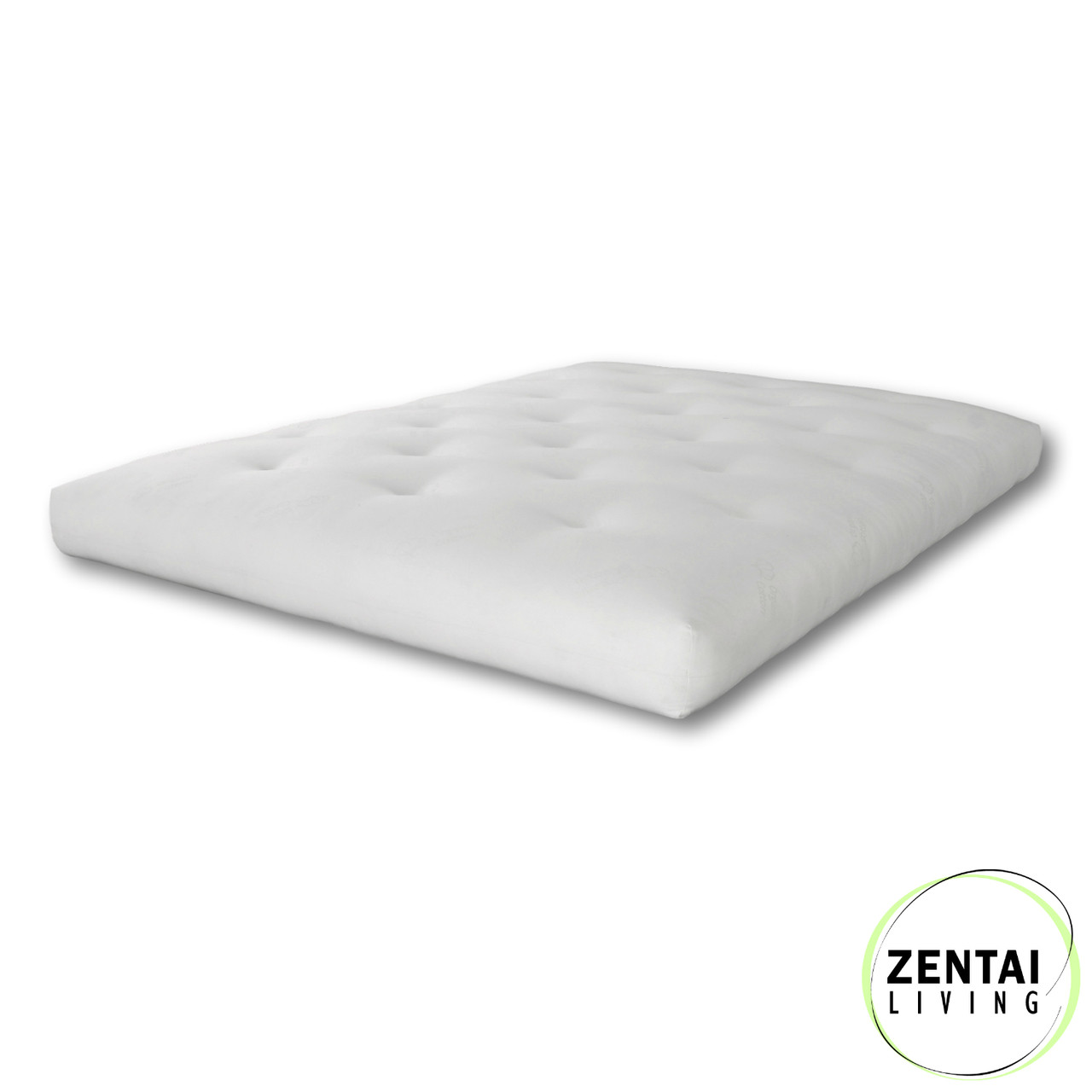
Fresh out of the packaging, your futon will look firmly compressed and may feel flatter and firmer than expected — this is completely normal and simply the result of tight rolling and compression for shipping.
Unroll it fully and leave it to air out and loft up for several hours (ideally a full day) before making the bed. Give it a light shake and a few gentle pats or an initial sunning session to help the cotton and foam fully decompress and reach its proper thickness and softness.