📢 Update: You can now contact us by landline 02 6685 6722 or Shop Mobile 0490 078 621 — available for both calls and texts.
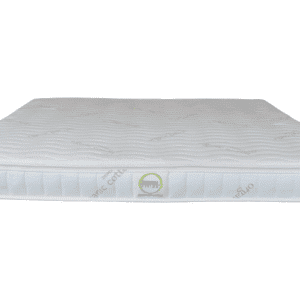
Mattress firmness is one of the most misunderstood aspects of choosing a latex mattress, and getting it wrong can mean years of disrupted sleep, back pain, and morning stiffness. Unlike a foam mattress where firmness is fixed at the point of manufacture, organic latex offers a level of adjustability and nuance that most buyers are not aware of until they start asking the right questions. Understanding how firmness works in a latex mattress, what the ratings mean, and how your body type and sleep position should influence your decision will help you choose with confidence rather than guesswork.
This guide covers everything you need to know about mattress firmness in organic latex mattresses, from how ILD ratings translate into real-world feel to how Zentai Living’s layered construction allows you to fine-tune your sleep surface over time. Whether you are a side sleeper, a back sleeper, or somewhere in between, the right level of firmness will make a measurable difference to your sleep quality and long-term spinal health.
When people talk about mattress firmness, they are usually referring to how soft or hard the surface feels under body weight, but the technical reality is more precise than that. In the mattress industry, firmness is measured using an ILD rating, which stands for Indentation Load Deflection, and it quantifies how many pounds of pressure are required to compress the mattress by 25 percent of its thickness. A lower ILD number indicates a softer feel with more give, while a higher number indicates a firmer surface with greater resistance, and organic latex mattresses are available across a wide range of ILD ratings to suit different sleepers.
It is important to understand that firmness and support are not the same thing. A mattress can feel soft on the surface while still providing excellent spinal support through the deeper layers, and this is one of the distinctive qualities of a well-constructed organic latex mattress. The surface comfort layer can be softer to cushion pressure points at the shoulders and hips, while the base layer remains firm enough to maintain the natural curve of the spine throughout the night.
Organic latex mattresses are typically available in ILD ranges that span from around 19 at the softer end through to 44 or above at the firmer end, with the mid-range sitting between 28 and 36 for most standard designs. At Zentai Living, our essential comfort range starts at the lower ILD levels and our premium tri-layer and duo-layer designs incorporate different firmness combinations that can be configured to suit the individual sleeper. Each layer in a multi-layer latex mattress can carry a different ILD rating, which means the feel at the surface, the transition zone in the middle, and the support at the base can all be independently calibrated.
One of the most common misconceptions is that firmer always means better for your back, but the research on sleep ergonomics consistently shows that the ideal level of mattress firmness depends on body weight, sleep position, and whether the sleeper has any existing musculoskeletal conditions. A very firm surface can create excessive pressure at the hips and shoulders for a side sleeper, forcing the spine out of alignment in the opposite direction to what a soft surface would. The goal is always a neutral spine position, and that position requires different firmness levels for different body types and sleeping styles.
Sleep position is the single most reliable starting point for choosing mattress firmness in an organic latex mattress, because the way your body contacts the sleep surface determines which pressure points are most active and how much give the mattress needs to provide without compromising spinal alignment. Different positions load the body differently, and a mattress that works well for one position can create significant discomfort in another.
Side sleepers generally benefit from a medium to medium-soft ILD range because the shoulders and hips need to sink into the mattress enough to keep the spine horizontal. If the surface is too firm, these contact points carry more pressure than they should, which leads to numbness, circulation issues, and shoulder pain over time. For side sleepers, an ILD in the 19 to 28 range at the comfort layer is typically the most effective starting point.
Back sleepers require a flatter and more even support surface, which means a medium to medium-firm feel tends to work best at an ILD of around 28 to 36. The lumbar region needs consistent support rather than pressure relief, and a mattress that is too soft will allow the lower back to sink in a way that exaggerates the natural curve of the spine and creates tension in the surrounding muscles. Front sleepers, though generally not recommended by sleep specialists, typically need a firmer surface in the 36 to 44 ILD range to prevent the hips from dropping too deeply and arching the lower back.
Body weight has a significant and often underestimated effect on how mattress firmness feels in practice, because heavier sleepers compress the mattress more deeply and therefore experience the material differently than lighter sleepers on the same product. A mattress that feels medium-firm to someone who weighs 70 kilograms may feel noticeably softer to someone who weighs 100 kilograms, because the additional weight pushes further into the ILD resistance curve.
For sleepers under 60 kilograms, a softer ILD in the comfort layer is usually appropriate because lighter body weight generates less compression, and without enough give the mattress may feel harder than its ILD rating would suggest. For sleepers in the 70 to 95 kilogram range, a medium ILD typically delivers the feel that the rating implies. For sleepers over 100 kilograms, moving toward the firmer end of the latex range or selecting a higher-density base layer will provide the support needed to prevent excessive compression and maintain spinal alignment through the night.
One of the most practical advantages of a multi-layer organic latex mattress is the ability to adjust the configuration if your initial firmness choice does not feel quite right after a settling-in period. Zentai Living’s tri-layer and duo-layer designs are constructed so that the internal layers can be rearranged to alter the overall feel of the mattress without needing to replace the entire product. This is a meaningful benefit over a single-layer or bonded foam mattress, where the firmness is fixed and the only option for changing the feel is to buy something new.
Couples with different body weights or sleep positions often find that a shared mattress presents a mattress firmness compromise that does not fully suit either person. With a configurable latex mattress, it is possible to set one side of the bed to a softer combination and the other side to a firmer one, so both sleepers can benefit from a surface that genuinely matches their needs. This flexibility is one of the reasons organic latex is consistently recommended by sleep specialists for couples with different sleep profiles.
The mattress firmness experience of organic latex differs from memory foam in ways that go beyond the ILD number, and understanding those differences helps clarify why latex is often the preferred choice for sleepers who want both responsiveness and support. Memory foam responds slowly to pressure and body heat, which creates a conforming feel that some sleepers find comforting and others find restrictive, particularly when changing positions during the night.
Organic latex responds immediately and elastically, meaning it pushes back against the body’s weight rather than slowly absorbing it. This elastic response is what gives latex its characteristic buoyancy, and it means that changing sleep position requires less effort because the mattress does not hold the body in place the way that memory foam does. For sleepers who move frequently during the night, this responsiveness translates into noticeably more comfortable sleep.
Memory foam also tends to retain heat, which can affect mattress firmness perception over the course of a night because foam that has warmed up from body heat will feel progressively softer than it did when you first lay down. Organic latex maintains a more consistent temperature profile because of its open-cell structure and natural breathability, which means the feel you experience at the start of the night is the feel you experience throughout.
Selecting the right mattress firmness in an organic latex mattress is straightforward when you approach it systematically, starting with your primary sleep position and body weight and then considering any specific health factors like back pain, hip problems, or joint sensitivity. At Zentai Living, our range covers ILD levels from softer essential comfort profiles through to firmer premium configurations, and our team is available to help you work through the decision before you purchase.
Our Byron Bay showroom allows you to test different configurations in person, which is the most reliable way to assess mattress firmness rather than relying on descriptions alone. If you are purchasing online, our detailed product guides and direct customer support line are there to help you choose the right ILD combination for your sleep profile, and our adjustable layer design means that if your initial choice needs fine-tuning after a period of use, the mattress can accommodate that without requiring a full replacement.
Getting mattress firmness right in your organic latex mattress is one of the most important decisions you will make for your long-term sleep quality and spinal health. Start with your sleep position and body weight, consider the ILD options across our range, and choose a layered design that gives you the flexibility to adjust as your needs change over time.
Shop Now and Discover Your Ideal Mattress Firmness with Zentai Living.