📢 Update: You can now contact us by landline 02 6685 6722 or Shop Mobile 0490 078 621 — available for both calls and texts.
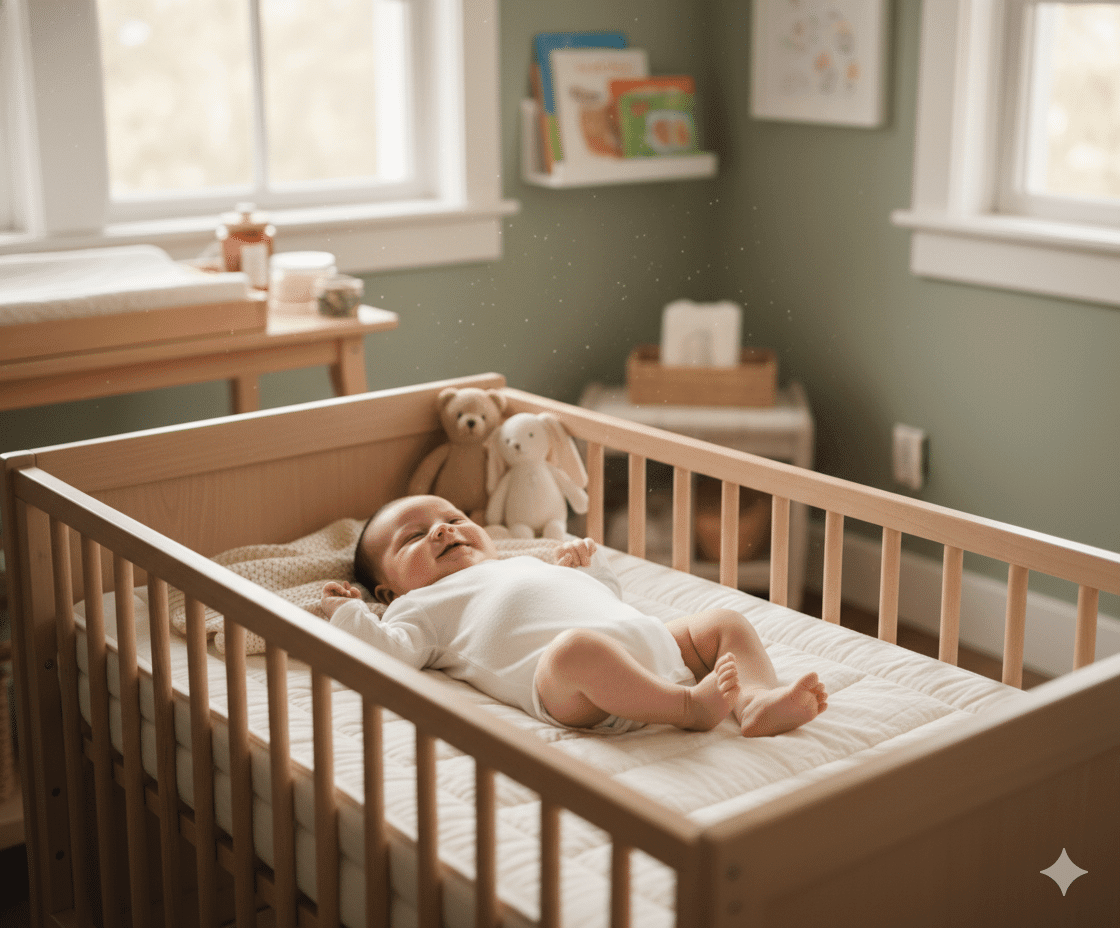
Latex vs foam is the question most Australian parents face when choosing a cot mattress for their newborn. It seems like a simple decision at first. But once you start reading labels, comparing certifications, and understanding what your baby actually sleeps on for the first years of their life, the stakes become clear. This guide breaks down the real differences so you can make a confident, informed choice.
Your baby spends up to 16 hours a day sleeping. That is more time than any adult spends in contact with a mattress. It is also happening during the most sensitive period of physical development. The material inside a cot mattress affects air circulation, temperature regulation, chemical exposure, and long-term durability. When you look at latex vs foam options side by side, the differences become clear quickly.
Conventional foam mattresses are made from polyurethane. This is a petroleum-based material that can off-gas volatile organic compounds, or VOCs, into the air your baby breathes. Latex, particularly certified organic latex, is derived from the sap of rubber trees. It is processed without the synthetic chemicals found in foam.
For parents who want the cleanest possible sleep environment, understanding latex vs foam from a materials perspective is the logical starting point.
Organic latex starts life as liquid sap harvested from Hevea brasiliensis, the rubber tree.When this sap is processed and certified to the Global Organic Latex Standard, known as GOLS, it meets some of the strictest requirements in the world. These cover organic content, chemical limits, and ethical sourcing.
At Zentai Living, our certified organic latex cot mattresses are made by hand in Byron Bay. They carry GOLS certification, Oeko-Tex Standard 100 Class 1 approval, and ECO Institut testing.Class 1 is the highest Oeko-Tex category. It is specifically designed for products that come into direct contact with babies.
When parents research latex vs foam for their cot mattress decision, the certification trail is one of the most reliable ways to verify what a manufacturer is actually claiming. A latex mattress without GOLS certification may still contain synthetic latex blends, additives, or adhesives. These defeat the purpose of choosing natural materials.
Babies cannot regulate their own body temperature as effectively as adults. This makes the breathability of a cot mattress a genuine safety consideration, not just a comfort one. Natural latex has an open-cell structure that allows air to move freely through the mattress. This prevents heat from building up around your baby during sleep. It also helps manage moisture that can accumulate overnight.
Better airflow means a fresher, drier sleep surface every night. Standard polyurethane foam has a denser, closed-cell structure that traps heat and moisture. Some foam manufacturers add ventilation channels to improve airflow. But that is an engineered workaround for a structural limitation, not a natural property of the material.
In the latex vs foam comparison on breathability, natural latex has a clear structural advantage that does not depend on any additional manufacturing steps.
A cot mattress needs to be firm enough to support a developing spine while providing gentle cushioning at pressure points. Natural latex achieves this through a property called elastic response. It compresses under weight and immediately returns to its original shape. This distributes pressure evenly across your baby’s body.
Memory foam, one of the more popular foam variants in the baby mattress market, responds more slowly. It can conform too closely around a baby’s face if they roll into a vulnerable position during sleep. Paediatric sleep safety guidelines in Australia recommend a firm, flat sleep surface for infants. Natural latex with the right ILD rating meets that standard.
In the latex vs foam debate on support, certified organic latex offers both firmness and responsiveness in a combination that foam finds difficult to match without added chemical treatments.
This is where the gap between the two materials is most significant for health-conscious parents. Conventional foam mattresses can contain flame retardants, formaldehyde-based adhesives, and VOCs that off-gas over time. The new mattress smell many parents notice when unboxing a foam cot mattress is often these compounds releasing into the air.
Certified organic latex, by contrast, undergoes rigorous third-party testing before it can carry certifications like GOLS and ECO Institut. The ECO Institut in Germany tests for both emissions and material content. This provides independent verification that the finished product meets strict limits. Oeko-Tex Class 1 testing covers over 100 harmful substances. These thresholds are specifically calibrated for products used by infants and babies.
When comparing latex vs foam on chemical safety, the certification framework around organic latex gives parents an independently verified baseline. Foam mattresses simply do not have the same level of third-party scrutiny.
Durability is a practical consideration that affects the total cost of a cot mattress over time. Natural latex is resilient and slow to degrade. A quality organic latex cot mattress will typically hold its shape and support properties for the full period your child uses a cot, and often longer. This matters because a mattress that sags or loses its firmness no longer provides the flat, firm surface recommended for infant sleep.
Polyurethane foam can begin to break down within a few years, particularly in cheaper products. The latex vs foam comparison on durability consistently favours latex for longevity. A higher upfront cost is often offset by not needing to replace the mattress before your child transitions to a toddler bed. It is worth calculating cost per year of use rather than comparing sticker prices side by side.
The latex vs foam decision comes down to what you prioritise for your baby’s sleep environment. If you want certified organic materials, third-party verified chemical safety, natural breathability, and a mattress built to last through your child’s cot years and beyond, certified organic latex is the clear choice.
At Zentai Living, our organic latex cot mattresses are handmade in Byron Bay using GOLS-certified latex and covered in certified organic cotton. They carry both Oeko-Tex Class 1 and ECO Institut certification. You can verify every certification on the label directly with the issuing body.
When it comes to latex vs foam for your baby’s cot mattress, the evidence points consistently in the same direction. Choose certified organic latex and give your baby the cleanest, safest, and most supportive sleep environment available in Australia.